It started with
a green screen.
Before the platforms and production decisions, there was curiosity. These are the firsts that turned it into a career.
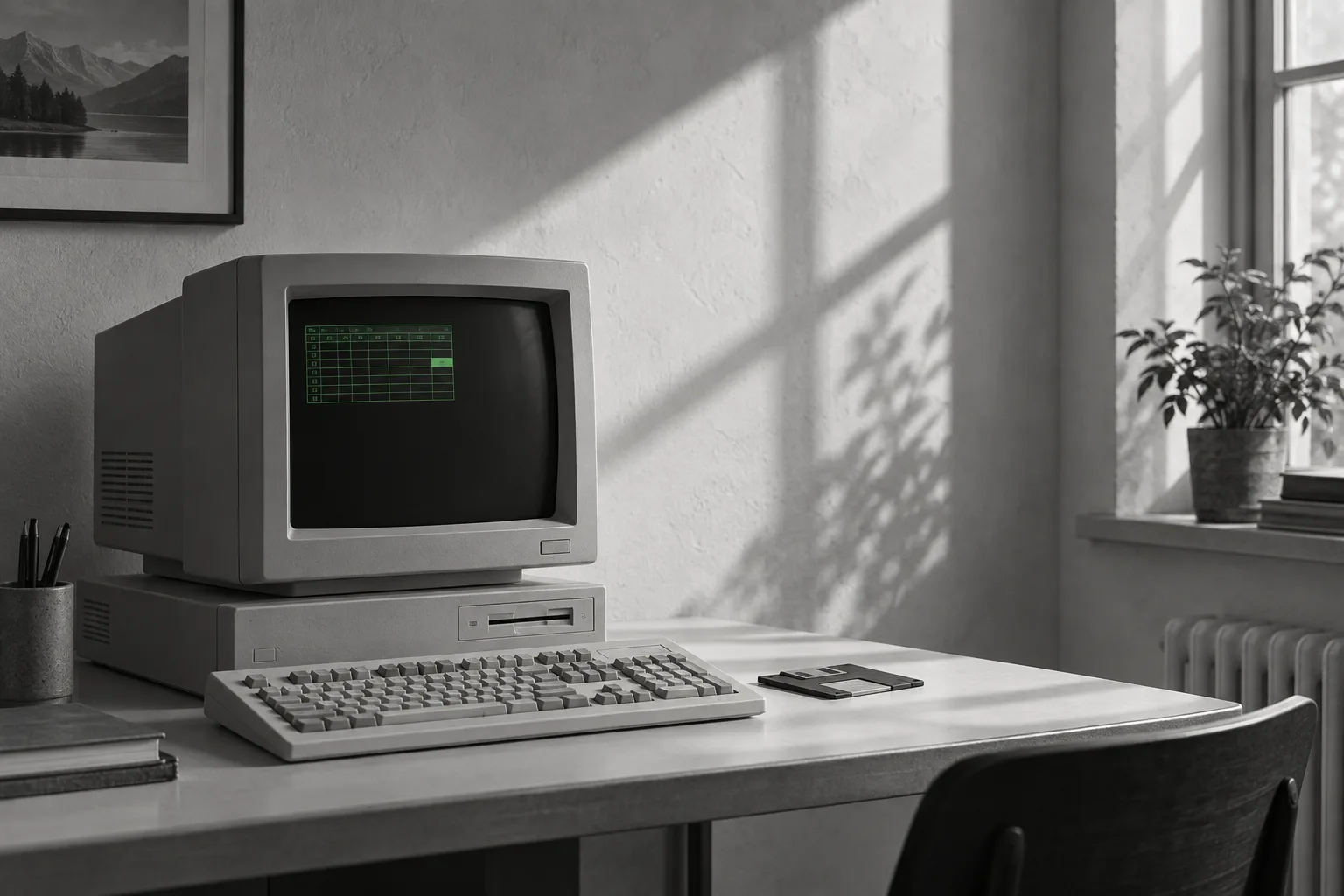
Before it was a career.
A green screen. An unsaved document. A ball moving across the screen. Small encounters that made computers feel like something I could understand—and eventually make things with.
A first glimpse
My first sight of a computer: a black screen, green text and Lotus 1-2-3.
The lesson in pressing Save
My first hands-on experience was Microsoft Word in Office 95. I also learned what happens when you forget to save.
A computer of my own
An Intel Pentium I opened up more time to explore.
From playing to making
I made my first game with QBasic and monochrome graphics.
Making a still image move
A bouncing ball in Flash 4 was my introduction to animation and motion tweening.
Work meets an audience.
Making something became more interesting when other people could use it, judge it or depend on it. Competitions and early paid work brought that feedback into the process.
A website, and a first win
My first HTML website was an entry in an inter-school competition. It won.
The details decide the result
My first live C++ coding competition introduced me to output mismatches: an answer has to be right in the form the system expects.
The first paid brief
I created online physics learning materials for a local university.
A wider playing field
I joined Topcoder as a competitor, taking my work into an international community.
Freelance work beyond home
Design and development work through Upwork became another route to independent projects and international collaboration.
Design on an international stage
My first international design competition brought a tenth-place finish. That year also took me to Washington, DC as a Topcoder Open finalist in the Studio Track.
Beyond the screen.
Interfaces began to connect to physical devices, real users and engineering teams. The scope of the work was growing.
An interface for something that flies
A drone controller dashboard became both my first Node.js project and my first WebSocket project. The interface was connected to a system beyond the browser.
Learning the craft of UX
Early UI and UX work gave me room to experiment with new ideas. Looking back, it also gives me a useful measure of how my design judgment has changed.
A degree, then a team
I graduated in Computer Engineering and began my first corporate software-engineering role. Working with experienced mentors gave that next stage a strong foundation.
The questions
got bigger.
Moving into financial technology brought a different level of responsibility: software practices, resilience and the consequences of changing a live system.
Today, that thread runs through my work in AI and technical leadership. The questions include how a team can deliver, how a migration can recover from interruption, and what a platform should cost to operate.
The tools have changed. The work still starts by understanding what is in front of me—and finding a useful next step.
What are you
working on?
A product to build. A team to lead.
A question about where AI fits.